
Most beach outings don’t fall apart at the beach — they fall apart two weeks before, in a group chat where everyone says “sure, I’m down” and nobody actually books anything. This guide walks you through how to plan a beach outing in the Philippines from the first “let’s go to the beach” message to the actual day, covering destination picks, budgeting, transport, and the logistics that quietly make or break group trips. By the end, you’ll know exactly what to lock down first, what to delegate, and what to skip entirely. If you want the broader nationwide version of this framework — covering longer, multi-day beach trips rather than just a single outing — see our companion beach trip planning guide.
How to Plan a Beach Outing in the Philippines: At a Glance
| Detail | Quick Answer |
|---|---|
| Ideal planning lead time | 2–4 weeks for nearby beaches, 4–6 weeks for islands requiring boat transfers |
| Best first decision | Lock the date before the destination — destinations are flexible, schedules aren’t |
| Common budget range | ₱1,500–₱4,000 per person for a day trip; ₱3,000–₱8,000 for overnight, depending on location |
| Biggest logistics risk | Transport coordination — vans, boats, or carpools falling through last minute |
| Who should lead planning | One designated organizer, not a group vote on every detail |
| Most skipped essential | A clear cutoff date for headcount and payment |
Beach Outing Checklist Philippines: What to Finalize First
Before anyone sends money or books a cottage, your group should already have the basic trip details written down. This keeps the beach outing from becoming another endless group chat discussion.
- Final date: Choose one confirmed date instead of keeping several “possible” weekends open.
- Confirmed headcount: Count only people who replied yes and paid the commitment fee.
- Estimated budget: Include transport, entrance fees, cottage or room rental, food, and emergency buffer.
- Transport plan: Decide if the group will rent a van, carpool, commute, or meet directly at the resort.
- Food plan: Clarify if you will bring packed food, cook at the resort, or order from the venue.
- Payment deadline: Set a final date for contributions so the organizer does not cover everything alone.
- Resort rules: Check corkage, check-in time, parking, pet rules, cooking rules, and extra guest fees.
Why Beach Plans Stall in the “Saan Tayo” Phase
Almost every beach outing starts the same way: someone posts “beach soon?” in the group chat, a flurry of fire emojis follow, and then… nothing. The conversation moves on to memes, work complaints, or whatever drama is happening that week. A week later, someone asks “so are we still going?” and the cycle restarts.
This isn’t because people don’t want to go. It’s because “let’s go to the beach” is a wish, not a plan, and wishes don’t have deadlines. Without someone naming a specific date and asking for a yes or no by a specific time, the group defaults to waiting for consensus — and consensus among 8–15 people rarely happens organically. The “saan tayo” (where are we going) question becomes a placeholder for every other unmade decision, and the trip quietly dies in committee.
The fix isn’t more enthusiasm. It’s someone treating the first message as a proposal with a deadline, not an open-ended poll.

Date or Destination First? The Decision That Sets Everything Else
Most groups try to pick the destination first, assuming the date will sort itself out once everyone agrees on “where.” This is backwards, and it’s the single most common reason beach trips take months to materialize instead of weeks.
Here’s why: destinations are flexible. La Union, Zambales, Batangas, and the Bicol coast all have multiple beach options within similar price ranges and travel times. But dates are rigid — they’re constrained by everyone’s work schedules, exam periods, family obligations, and that one friend who’s “always busy in Q1.” If you try to find a destination everyone loves first, you’ll get there, then discover half the group can’t make the only weekend that works.
Flip the order. Pick 2–3 candidate weekends based on holidays, paydays, and general availability. Ask the group to vote on dates first — even roughly. Once you have a date with enough people committed, the destination becomes a much smaller decision, often solvable in a single message thread, because you’re now choosing among options that fit a fixed window rather than trying to align an infinite number of variables at once.
Matching the Beach to Your Group’s Actual Energy Level
Picture this: your barkada is choosing between two options. Option A is a quieter beach two hours away with calm water, good for swimming and just hanging out. Option B is a more “happening” beach four hours away with beach bars, activities, and a livelier crowd — but also higher costs and a longer travel day.
The group ends up arguing not about logistics, but about what kind of trip this is supposed to be. Half the group wants to relax and skip the noise; the other half wants the “experience.” Neither side is wrong — but if this conversation happens after a destination is already half-booked, someone ends up disappointed no matter what you choose.
Have this conversation early, even informally. Ask: is this a recharge trip or a “let loose” trip? A trip with younger cousins and lolas in tow has very different needs than a trip that’s purely barkada. Matching the beach’s vibe to the group’s actual mood — not the group’s aspirational mood — prevents the quiet resentment that shows up halfway through the day when half the group wants to nap and the other half wants to do a pub crawl.
If you’re eyeing a date between June and October, factor in typhoon risk — especially for destinations on the eastern coastlines or requiring boat transfers, where a single weather advisory can cancel the whole trip with little notice. You can check current advisories directly through PAGASA before locking in dates. This doesn’t mean avoid these months entirely, but build in a backup date or a closer, land-accessible alternative before locking in non-refundable bookings. If the forecast turns on you anyway, our guide on what to do at a resort during bad weather covers how to salvage the trip once you’re already there.

Locking Down Money and Headcount Before Anyone Books
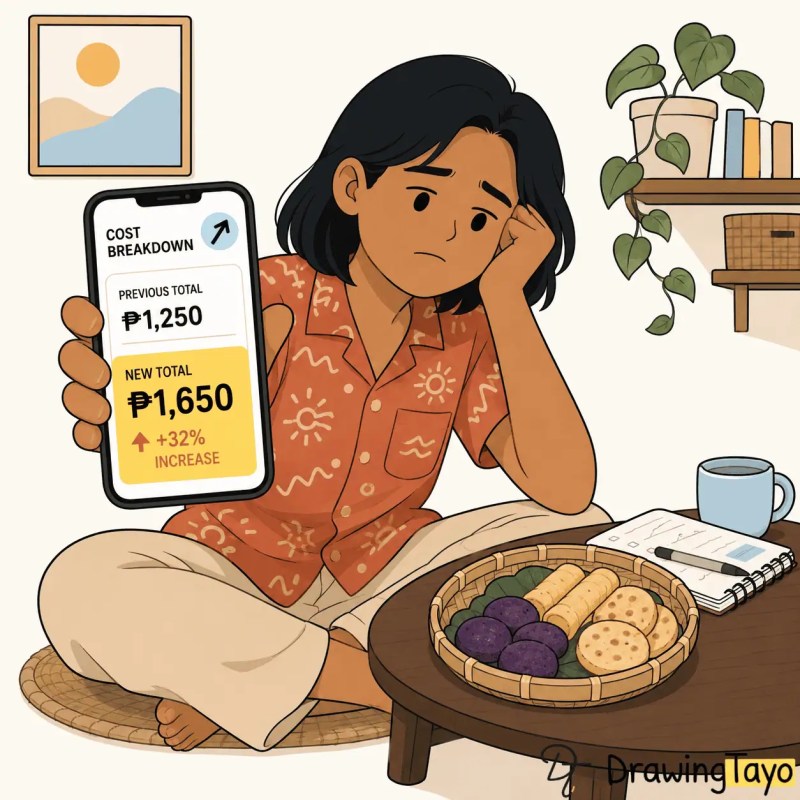
The single most damaging assumption in group beach planning is that headcount will “settle naturally” as the date gets closer. It doesn’t. It fluctuates right up until the morning of the trip, and every fluctuation ripples through your van size, your room or cottage booking, and your per-person cost split.
Here’s the order that actually works:
- Set a firm RSVP deadline — at least 7–10 days before the trip date, not 2–3 days.
- Collect a small non-refundable commitment fee (even ₱200–₱500) from everyone who RSVPs “yes.” This single step filters out maybes far better than any reminder message.
- Book accommodations and transport based on confirmed-and-paid headcount only — not the group chat’s optimistic estimate.
- Recalculate the per-person cost split once final numbers are in, and communicate it clearly before the trip, not after.
- Set a final balance deadline at least 3–5 days before departure, so no one is scrambling for cash on the morning of.
Skipping the commitment fee step is the most common mistake here. Without it, “I’m in” carries no weight, and organizers end up either overpaying upfront or scrambling to rebook smaller transport at the last minute.
Getting Everyone There Without a Convoy Disaster
Two common approaches show up here, and they play out very differently. The first is the “everyone meets at the beach” approach — people travel separately, by car, bus, or carpool, and converge at the destination. The second is the “one rented van or coaster” approach — everyone meets at a single pickup point and travels together.
The separate-travel approach feels flexible on paper, but it consistently causes the most friction in practice. Someone’s car breaks down. Someone takes a wrong turn near the destination with no signal to call for directions. People arrive in staggered batches over a two-hour window, and the “group” part of the group outing doesn’t actually start until everyone’s there — sometimes well past lunch.
The rented van or coaster approach costs more upfront and requires more coordination beforehand (one pickup point, one departure time), but it consistently produces smoother trips for groups of 8 or more. Everyone arrives together, leaves together, and the per-person transport cost is usually comparable to gas and toll splits once you account for multiple vehicles. For groups under 6, separate travel is usually fine. Above that, the coordination cost of separate travel almost always exceeds the savings.
If your destination requires a boat transfer — Batangas to Mindoro, Cebu to Camotes, or any island-hopping leg — treat the ferry schedule as the anchor for your entire itinerary, not an afterthought. Ferries run limited daily trips, get fully booked during long weekends, and are the first to get suspended once the Philippine Coast Guard issues a “no sail” advisory due to weather. Book ferry slots before finalizing van or hotel arrangements, and always build in a buffer day or a same-day backup plan if your group is doing a beach outing that depends on a single return trip.

What the Day Actually Looks Like, Hour by Hour
A loose itinerary isn’t about being rigid — it’s about giving the group a shared sense of pacing so the day doesn’t quietly disappear into “we’ll figure it out.” Here’s a realistic breakdown for a day-trip beach outing within 2–3 hours of Metro Manila:
| Time | Activity | Notes |
|---|---|---|
| 5:00–5:30 AM | Pickup / departure | Earlier departure avoids midday traffic on coastal roads |
| 7:30–8:30 AM | Arrival, breakfast stop | Some groups grab food en route to save time on arrival |
| 9:00 AM–12:00 PM | Beach time, swimming | Morning sun is more comfortable for activities |
| 12:00–1:30 PM | Lunch | Pre-arrange with the resort or cottage if eating there |
| 1:30–4:00 PM | Free time / activities | Island hopping, games, or just resting depending on group split |
| 4:00–5:00 PM | Cleanup, shower, pack up | Build in buffer — this always takes longer than expected |
| 5:00 PM | Departure | Leaving by 5 PM avoids the worst of the return traffic |
The point isn’t to follow this exactly — it’s to give people a rough sense of when things shift, so the group doesn’t end up doing nothing until 11 AM and then rushing everything else.

When the Beach Trip Becomes a Half-Group Trip
This is the scenario almost every organizer eventually recognizes: the trip happens, but only 60% of the people who said yes actually show up. The van is half-empty, the cottage is too big, and the per-person cost — already calculated based on the full group — suddenly lands harder on everyone who did come.
This happens when “yes” in a group chat is treated as a confirmation rather than an intention. People genuinely mean it when they say they’re in, but life happens — work schedules shift, someone gets sick, someone’s car plans fall through — and without a financial commitment or a hard deadline, dropping out costs them nothing.
The downstream effect isn’t just awkward math. It’s that the people who showed up — who rearranged their weekends and paid on time — end up subsidizing the people who didn’t. Over time, this quietly discourages your most reliable people from organizing or joining future trips, because they’ve learned that commitment doesn’t actually mean commitment in this group.
How DrawingTayo Keeps Beach Plans From Unraveling
A lot of what derails beach outings — vague RSVPs, no clear deadline, scattered payment tracking, and a group chat that’s impossible to scroll back through — isn’t a people problem, it’s a tooling problem. DrawingTayo gives your group a single space to propose a date, collect real RSVPs, track who’s paid, and keep all the trip details in one place instead of buried in a 400-message thread.
DrawingTayo lets you set your beach trip date, collect confirmed headcounts, and track who’s paid — all in one shared link your barkada can check anytime.
FAQs About Planning a Beach Outing in the Philippines
How far in advance should we plan a beach outing?
For beaches within 2–3 hours of Metro Manila, 2–4 weeks is usually enough. For islands requiring boat transfers or longer travel (like parts of Batangas, Zambales, or further south), aim for 4–6 weeks to account for ferry schedules and accommodation availability, especially on weekends.
How do we split costs fairly when not everyone wants the same activities?
Split shared costs — transport, cottage rental, common meals — evenly across confirmed attendees, and let optional activities like island hopping or water sports be paid individually by those who join. This avoids subsidizing activities some people don’t want.
What’s a reasonable commitment fee to collect upfront?
₱200–₱500 is common for day trips, scaled higher (₱500–₱1,000) for overnight trips with accommodation deposits. The amount matters less than the act of collecting it — it’s what separates a real RSVP from a maybe.
Should we book a van/coaster or just have people drive separately?
For groups of 8 or more, a shared van or coaster is usually more reliable and not significantly more expensive once you account for gas, tolls, and parking across multiple vehicles. For smaller groups, separate travel works fine if everyone has reliable transport.
What’s the best time of year for a beach outing in the Philippines?
The dry season, roughly November to May, offers the most reliable weather, though it’s also peak season with higher prices and bigger crowds. If your group is flexible, weekday trips or shoulder months (early November or late May) tend to be less crowded.
How do we handle people who back out last minute?
If you’ve collected a non-refundable commitment fee with a clear policy stated upfront, last-minute drop-outs lose that fee rather than shifting costs onto the rest of the group. Communicate this policy when you first ask for RSVPs, not after someone backs out.
Final Thoughts
The hardest part of a beach outing isn’t the beach — it’s getting a group of busy people to commit to a date, pay on time, and show up. Lock the date before the destination, collect real commitments early, and the rest tends to fall into place. Ready to start? Create your trip on DrawingTayo and get your barkada’s RSVPs sorted in one place.
Read Next
Image References
- Beach group photo reference: My Manila Girl – Iloilo Isla de Gigantes Boracay Trip
- Quiet beach image reference: Philippines Hidden Gems – Calaguas Islands
- Busy beach image reference: Tripadvisor – Just a Group of Friends
- Ferry image reference: Tripadvisor – Caticlan Airport Transportation to Boracay Island Round Trip
- Candid boodle fight reference: Tripadvisor – Candid Boodle Fight